

Available technologies for robotics

Rotary (2D)

Linear (1D)

Joystick (3D)
Technology choice
- Magnetic or inductive
- Ease of integration
- Stray field immunity
- Cost-effective
Related products


Documents and tools
Application flyer(s)
Product flyer(s)

Coreless integrated

Technology choice
- Ease of integration
- Stray field immunity
- DC to 300 kHz
Related products


Infrared sensor array

Technology choice
- Arrays up to 32 x 24
- I2C interface
- Privacy preservation
Related products


Motor driver

Technology choice
- Driver (<40W) and pre-driver (< 500W)
- 12 V, 24V and 48 V
- SPI, I2C, UART interface
Related products


Technology choice
- Resolves normal and shear forces
- Fully integrated mechatronic system
- No end-of-line calibration required
Related products


Application examples for robotics


Innovation highlights
We are developing single Integrated Circuit (IC) solutions which are Robot-Operating-System (ROS) compliant. They combine our expertise in magnetic sensing, signal conditioning, on-board diagnosis for functional safety, automotive quality solutions and advanced packages.
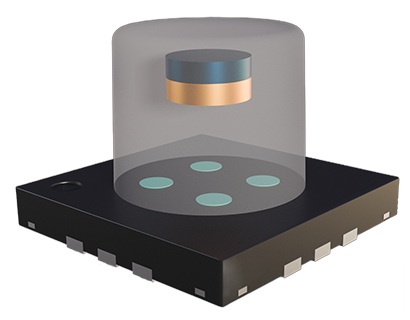
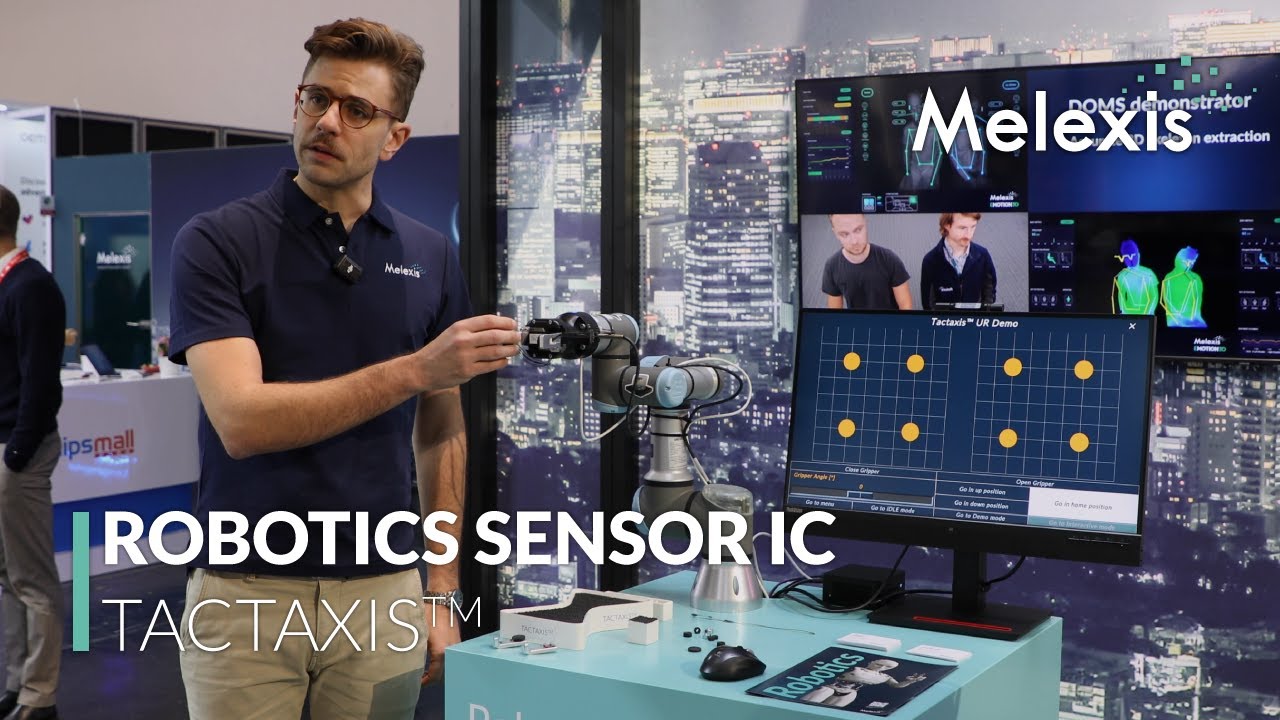
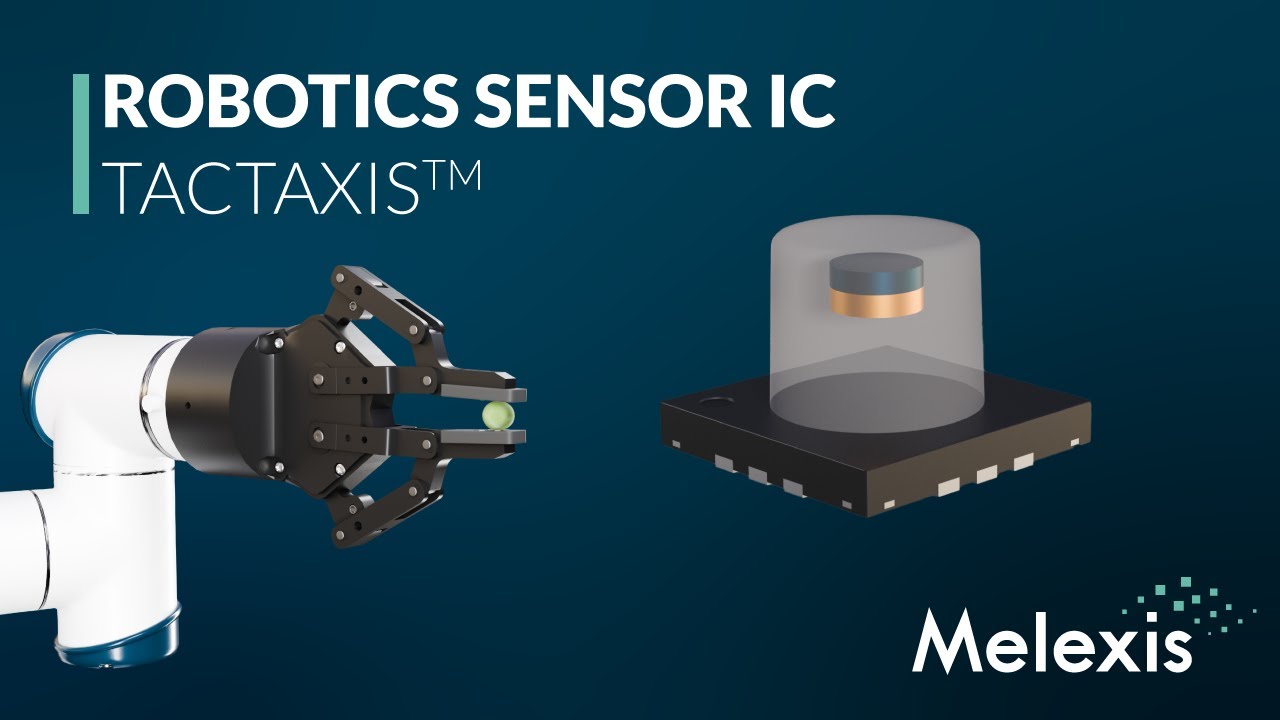
Force - Tactaxis®
Triaxis® 3D magnetometer and magnet embedded in an elastomer
- 3D force sensing
- Soft contact surface
- Scalable into array
Description
For industrial robots and humanoids, who need the sense of touch to manipulate fragile objects, Melexis brings a tactile sensor. It is compact, soft and provides the 3D force vector acting on the surface. Unlike optical tactile sensors using computer vision feedback, our force sensor is fully integrated and will be mass manufactured using semiconductor technology. It offers cost and reliability advantage.
Videos
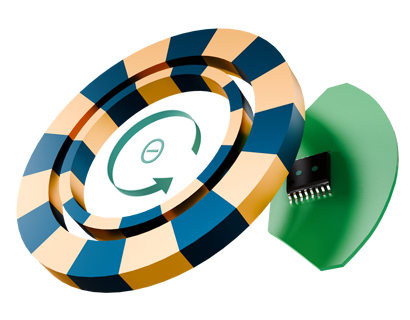
Position & speed - Arcminaxis®
Triaxis® position sensor and multi-track magnet
- 18-bit resolution
- Relaxed assembly tolerances
- Mounted on hollow shaft
Description
For industrial robots, cobots, exoskeletons who need a 16-bit resolution and 12-bit accuracy sensor for their joint control, Melexis' angular sensing solution offers on-chip calibration, speed measurement and system scalability. Unlike other dual magnetic track angular sensors, we ease assembly tolerances and reduces the overall Bill-of-Material (BOM).
Videos

Position & speed - Inductive
22-bit high-speed inductive encoder
- 16-bit or 22-bit options
- Dual-channel operation with zero latency
- Compact coil design and tighter PCB layouts
Description
For industrial robots, cobots, and large machinery joints requiring high-precision position sensing, Melexis' MLX90520 inductive encoder offers superior 22-bit resolution and stray field immunity. Unlike bulky optical encoders, our slim, off-axis solution significantly reduces system size and weight while simplifying mechanical integration through relaxed assembly tolerances and hollow-shaft compatibility.
Video
Frequently Asked Questions About Robotics
Robots combine external perception sensors to understand their surroundings with internal actuator sensors and motor drivers to execute precise, closed-loop movement. To navigate workspaces and interact safely with objects, robots rely on cameras, distance sensors, far-infrared (FIR) thermal arrays for human detection, and tactile sensors that measure physical contact. Inside joints, wheels, and grippers, magnetic and inductive position sensors, current sensors, and temperature sensors continuously feed rotor angle, torque, and thermal data to embedded motor drivers for smooth BLDC and stepper motor control. Melexis supplies a comprehensive portfolio of robotics ICs and modules, including magnetic and inductive position sensors, current sensors, temperature sensors, embedded motor drivers and pre-drivers, FIR thermal sensors, and the Tactaxis® 3D tactile sensor module. Read more in our story on why robots must sense before they can act.
Tactile sensing gives robots information about physical contact, including pressure, force direction and changes that may indicate an object is slipping. While vision helps a robot locate an object and plan its approach, tactile feedback helps the controller adjust the grasp once contact begins. This is especially useful when handling fragile or unfamiliar objects, where appearance or finger position alone cannot reliably determine the appropriate gripping force. Melexis develops Tactaxis®, a magnetic tactile sensing technology for robotic hands and grippers. See our tactile sensor modules.
For robotic joints, inductive and magnetic encoders are the best choice over traditional optical encoders, delivering high accuracy without fragile optics, strict alignment tolerances, or vulnerability to dust and lubricants.
Inductive encoders provide optical-rivaling resolution (up to 22-bit) in slim, through-shaft assemblies with full immunity to stray magnetic fields from adjacent motors, while magnetic encoders offer maximum mounting flexibility, wide air-gap tolerances, and cost efficiency in tight spaces. Because real-world positioning accuracy depends on the entire mechanical and environmental sensing assembly, not raw resolution alone, choosing a robust contactless architecture is essential. Melexis simplifies joint design by offering both high-performance magnetic and inductive encoder ICs, allowing robotics engineers to optimize every axis with one trusted semiconductor supplier. Discover more in our application flyer on encoders and resolvers for robot joints.
Magnetic and inductive encoders both measure position without contact, but they use different physical principles. A magnetic encoder uses a sensor IC to measure the field of a magnet on the shaft, which keeps the assembly compact and allows on-axis or off-axis mounting. An inductive encoder uses coils on a printed circuit board to detect a metal target, so it needs no magnet and is not affected by magnetic stray fields from nearby motors. Melexis offers both magnetic and inductive technologies, including resolvers and encoders to meet the specific requirements. Discover more in our application flyer on encoders and resolvers for robot joints.
Humanoid robots require high-density joint sensors, miniature motor drivers, balance sensors, and human-safe perception and touch modules to coordinate whole-body locomotion and dexterous manipulation. Across dozens of compact, hollow-shaft joints and multi-fingered hands, humanoids pair magnetic and inductive encoders with current sensors and embedded BLDC or stepper motor drivers to control motor commutation, gearbox output angle, and joint torque within tight space and power budgets. Inertial measurement units (IMUs) track body orientation for dynamic balance, while cameras, LiDAR, and far-infrared (FIR) thermal sensor arrays map obstacles and detect nearby people in any lighting condition without capturing identifiable images. At the fingertips, 3D tactile sensors resolve both normal and shear forces so robotic hands can grasp fragile objects without slipping. Melexis enables humanoid platforms with compact magnetic and inductive position sensor ICs, current sensors, embedded motor drivers, FIR thermal sensor arrays, and Tactaxis® 3D tactile sensing modules. Learn more on the Melexis humanoid robots page.
Robotic hands and grippers use tactile sensors based on resistive, capacitive, piezoelectric, optical and magnetic sensing principles. These approaches convert contact into electrical or optical measurements, with different capabilities for measuring sustained force, rapid changes, surface detail and force direction. Magnetic tactile sensing, such as Melexis' Tactaxis® technology, measures a magnet's movement within a deformable contact surface to determine true three-axis force. Selection depends on the manipulation task, available space, durability and integration requirements.
Melexis supplies sensors and motor drivers for robotics: magnetic and inductive position sensor ICs, current and temperature sensor ICs, Tactaxis® tactile sensing modules and motor driver ICs. Other robotics sensor suppliers range from semiconductor manufacturers and specialist sensor companies to suppliers of complete encoders, force sensors and vision systems. The appropriate supplier depends on whether the design requires an IC for a custom assembly, an integrated sensing module or a complete subsystem, together with the development support needed to bring it into production.
Get in touch
Do you have questions, or would you like to discuss your project with us?