
If AI is the brain, sensors are the nervous system
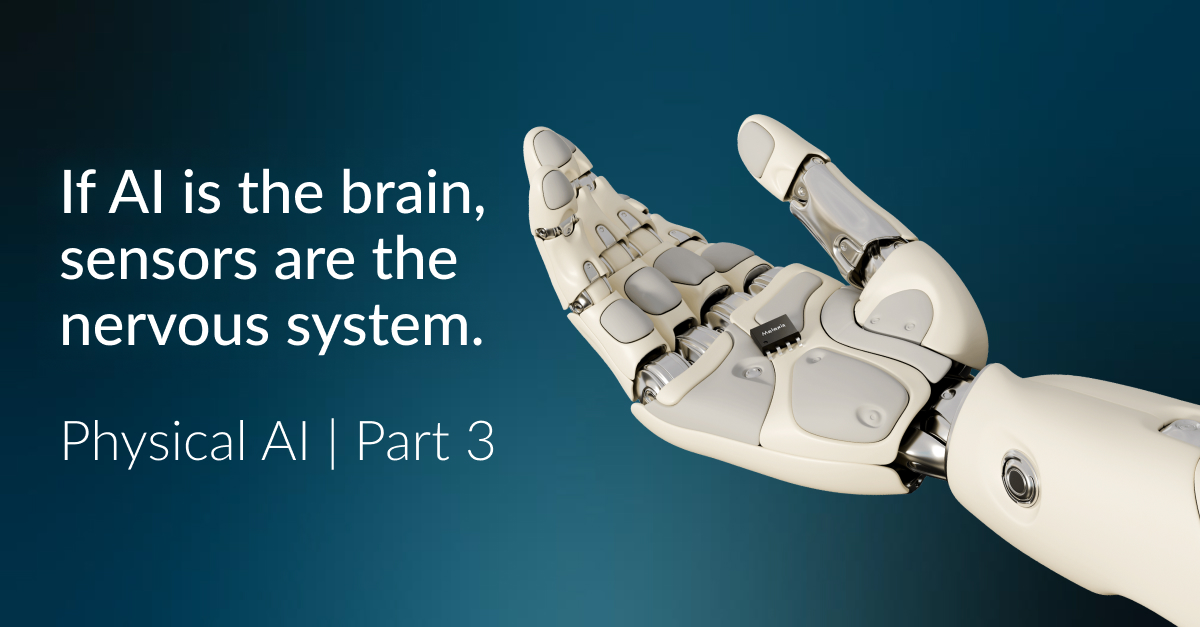
AI can reason, plan and make decisions. But when it enters the physical world, it needs to know what is happening around it. Stories of bumping delivery robots or issues with autonomous vehicles show why AI-led machines need an accurate, real-time understanding of their surroundings before they can act safely. That is where sensing becomes essential.
The body parts of physical AI
We often describe AI as the brain of an intelligent machine. Motors and actuators are its muscles and sensors are the nervous system, continuously feeding information back to the brain. Where is the robotic joint? Has the gripper made contact? Is the object slipping? Is a component getting too hot? Physical AI operates in a continuous loop:
Sense → interpret → decide → act → sense again
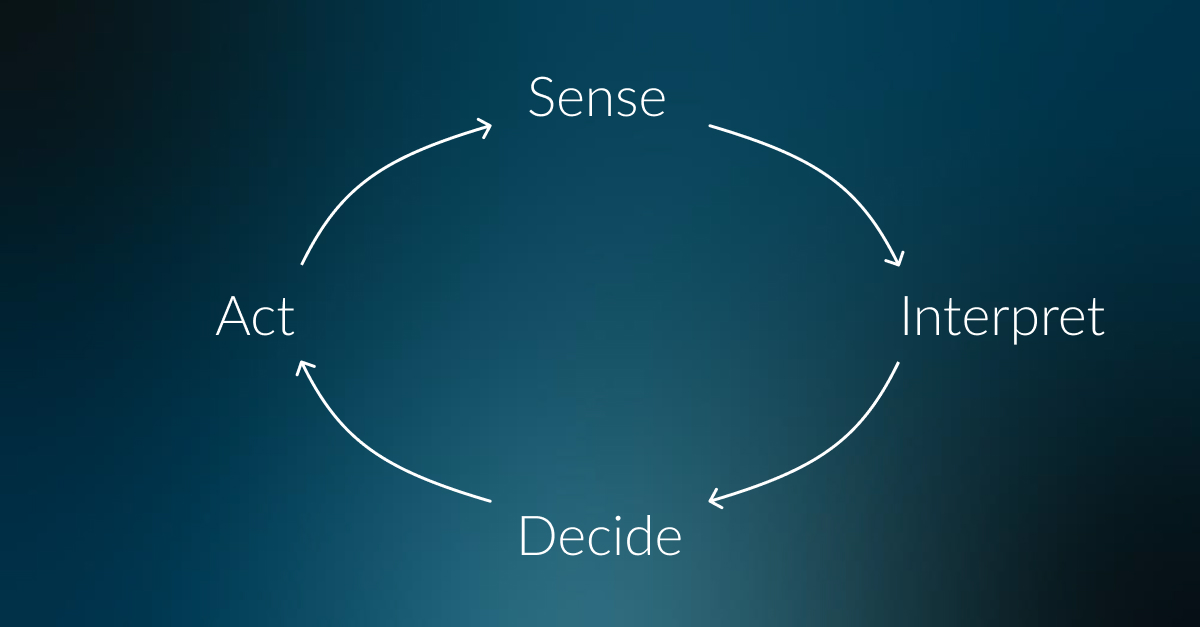
That is what sets physical AI apart from software AI. A language model can revise an answer when new information arrives, but a robot has to respond in real time and cannot undo an action.
The different senses of a machine
Just like people rely on different senses to navigate the world, machines need multiple types of sensing solutions to operate reliably in the physical world.
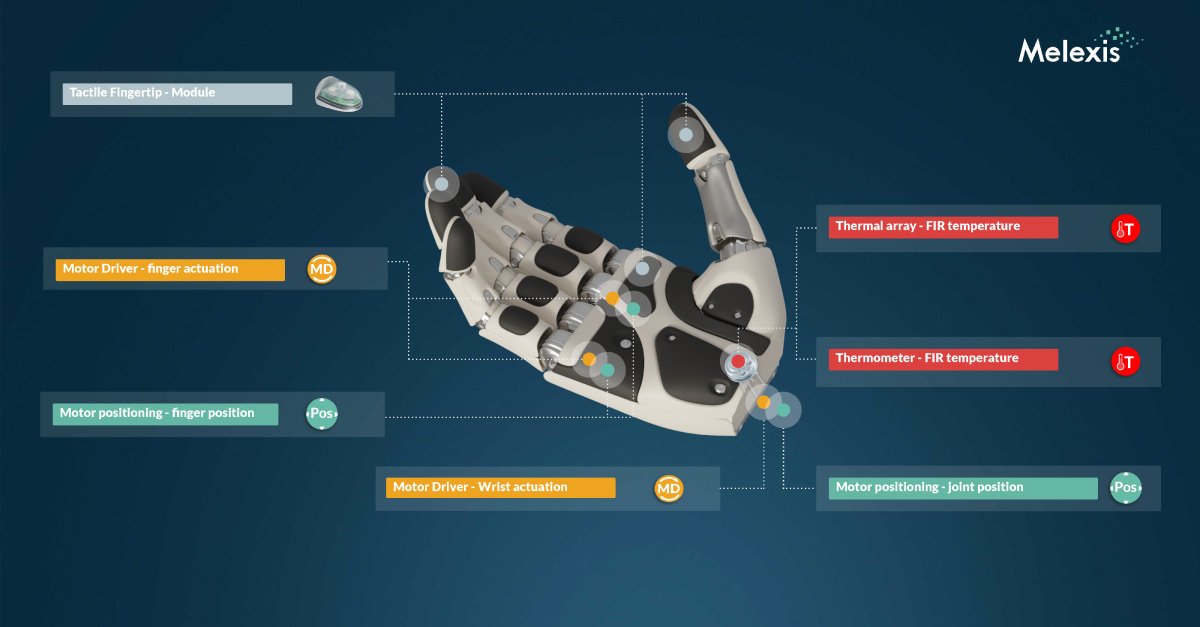
- Tactile sensing gives machines a sense of touch. Melexis’ Tactaxis® technology enables three-dimensional force sensing through a soft contact surface, giving robots information about contact and force.
- Position sensing enables machines to execute precise, reliable movements by providing real-time feedback for motor control and joint positioning. Inductive and magnetic sensors deliver the robust, non-contact monitoring needed for demanding applications.
- Temperature sensing helps machines monitor their own condition and the systems around them. Melexis offers contactless infrared temperature sensors, including miniature thermometers and thermal array sensors that can detect temperature patterns across an area.
- Current sensing provides insight into the electrical conditions behind movement and operation. Melexis’ current sensor portfolio includes Hall-effect and shunt-based solutions.
From awareness to action
But awareness is only half of the equation. Once a machine knows what is happening and decides how to respond, it still has to act on that decision. This is where PWM/Serial motor driver solutions come in, translating decisions into the motor movements that make a robot’s response real.
None of this comes down to simply choosing the right sensor or motor driver. Sensing, processing, control and actuation all need to work together within real-world constraints such as space, power consumption, complexity, durability and reliability. That challenge only grows as robots move beyond controlled production environments and start working alongside people.
Melexis has spent decades teaching machines to sense the world precisely, in places where accuracy and reliability are essential. That same expertise is increasingly relevant as physical AI expands into the real world. The challenge for physical AI is therefore not simply to make machines smarter. It is to give that intelligence a reliable connection to the physical world. Because a machine that doesn’t know what’s happening around, will never truly know what to do next.

