
When society needs hands, physical AI turns digital intelligence into action
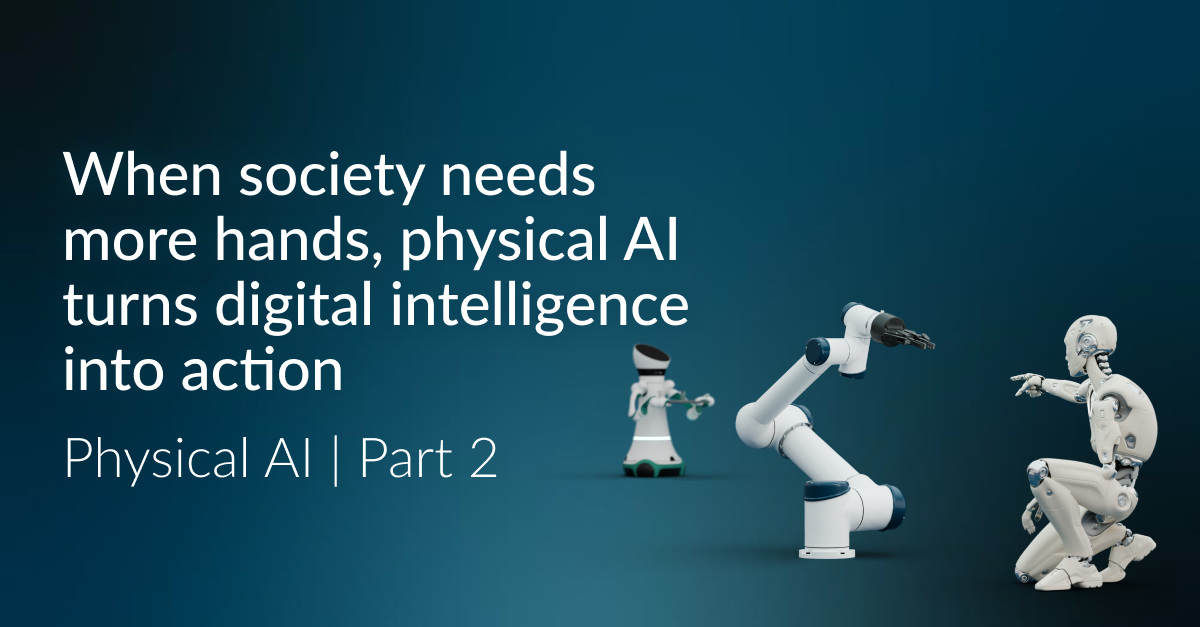
Software optimizes decisions, but software alone can’t lift a patient, assemble a machine, or pick a strawberry without crushing it. While most European and Asian countries are facing an eldering population and shrinking workforce, demand in healthcare, manufacturing, and logistics is rising at an enormous pace. Solving this gap requires physical AI: machines that perceive, decide, and act in the real world to help humans to live a dignified life.
Augment humans, don’t replace them
Physical AI is not built to eliminate human labor; it exists to automate, preserve productivity and remain competitive as society. By taking over hazardous, repetitive, or physically exhausting work, robots free human workers to focus on tasks requiring judgment, empathy, and creativity.
Feeding digital brains with sensory input
AI provides the brain, but an isolated brain cannot interact with reality. Physical AI requires high-precision sensors and actuators, acting as digital senses, muscles, and joints.
To act safely in our world, machines must first perceive and interpret the specific environment they are deployed in. High-precision sensing provides this real-time perception, allowing collaborative robots, or cobots, to step out from behind safety fences and adapt instantly to human movement. Once a decision is made, actuators step in to translate that digital thought into smooth, controlled physical action, giving machines the ability to interact with precision.
Ease the burden across key sectors
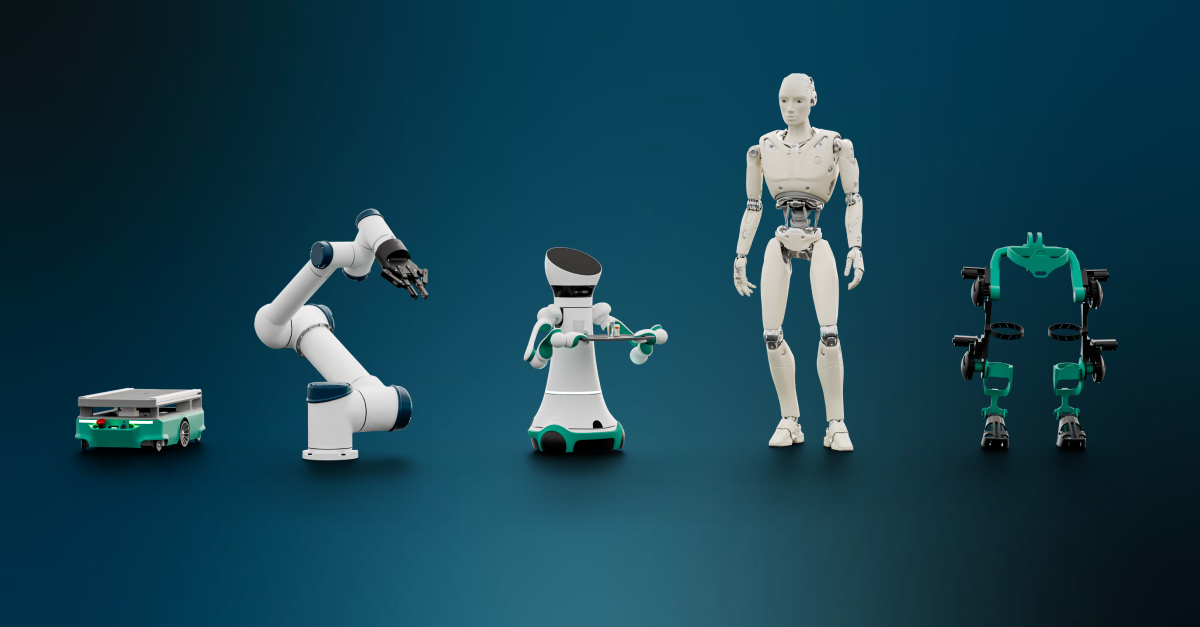
In healthcare, physical AI assists patient rehabilitation and handles medical supply transport to directly ease caregiver burnout. Across manufacturing and construction, exoskeletons and smart machinery support workers executing high-strain jobs like plastering or painting, removing the toll of physically demanding roles. Meanwhile, logistics operations leverage these capabilities to drive next-generation cobots, navigate autonomous warehouse transport, monitor hazards in real time, and handle preventive maintenance tasks.
Pioneering Physical AI since 1989
Physical AI relies on tangible hardware that can feel and respond. In a way one can say that Melexis has been driving physical AI for over 35 years, i.e. long before AI became a buzzword. Since 1989 Melexis engineers the sensors and actuators that bridge digital brains with the physical world, by collaborating with world-class research institutes and universities like VUB in Belgium, EPFL in Switzerland and many more on breakthrough innovations like Tactaxis.
Human-centric technology gives machines the sensibility to empower, enrich and enable human lives where it matters.
Stay tuned for Part 3!
